Sunday, March 27, 2011

Our Kitchen Before and After

Well it has taken almost 10 months since we first started working on the kitchen and there are still a few details left to clean up (window coverings, seat cushion, baseboards) but in our minds the kitchen in complete.

The "Green" features of our kitchen:

- No and low VOC paint
- Low VOC sealants
- Formaldehyde free cabinets made from FSC wood
- Zodiaq Recycled glass countertop
- Cork flooring
- R-24 Insulation and full air/vapour barrier
- Energy star appliances
- LED under-cabinet lights
- Recycled MDF, low VOC window trim
- Electronic charge station with dedicated switch
- 95% of demolition and construction waste diverted from the landfill

What is was:


Our new kitchen (although I am not too happy with the pictures. There always seemed to be too much contrast):


View from Family Room
View from Dining Room

Pantry Unit


Desk and Banquette

LED Lights in Action
Next up... the bathrooms.

Thursday, March 24, 2011

LED undercabinet lights

I had blogged previously about my preference for LED lights over CFLs.  Our house is finally starting to reflect that preference.

For our undercabinet lights we installed strip LEDs from LED Lights Canada.  We had looked originally for off the shelf options from the likes of Rona and Home Depot but weren't satisfied with the light output. LED Lights Canada has these ones custom made for them.  The result: 400 lumens per metre on 10 watts.
Custom cut LED strip for smallest cabinet

Installation was a breeze and the light quality and brightness is excellent.  We also had friends comment on how cool they run compared to their halogen lights.  You can run them all day and they will be only slightly warm to the touch so they don't heat up all your food being stored in the cabinet above.

Our only issue is that I had anticipated having off-the-shelf lights which would plug in.  So I wired one switch controlling three outlets. The strips we did buy have no built in driver.  LEDs use 12V power not 120V (which is why they work so well for battery powered flashlights).  So when hooking into your home power they need the power converted using a driver.  Replacement LED bulbs have that driver built in.  These didn't.  It is not a big deal, it just means that you need to buy a separate driver or in this case because of how I wired things up ... three drivers which pushed the price up.

I also need to give huge props to Harvey Hoffman (LED Lights Canada's owner/president) for the excellent customer service.  Sent him a long winded email and I got an immediate phone call with him walking me through the easiest and cheapest way to do my set up.  He custom cut all the strips to fit my cabinets and when I couldn't find the mounting clips with my order (I probably threw them out with the packaging) he mailed new ones the next day no questions asked.

Excellent product, excellent service, hopefully this Edmonton based company will do well.  I take the fact that they are sold out of the cabinet strips until next week's shipment as a positive sign of their success.

Saturday, March 19, 2011

New Zodiaq Counters

It has been a while since our temporary counters went up ... over 6 months.  Probably a little longer than normal but that does include our new baby renovation hiatus.

But a big part of the problem came from the fact that we knew what we wanted and we thought we knew where to get it.  Last year at the Montreal Home Show I saw a locally made recycled glass countertop.  It was beautiful and functional, 90% recycled content and locally sourced.  The company was Eco-Surface.  Their quote was good but their colour selection left a little to be desired.   The good news was they were expanding and in 100 days would be able to provide us a much better palette to pick from.

So we put up our temporary counters and waited.  Towards the 100 day mark we contacted them again to find their website directed us to: "Creations di Verre cite".  Alright, name change with expansion  ... no problem.   But there was a problem:  nobody would pick up the phone, or respond to an email, or website inquiries.   Heck their contact information on their website just provides their website address.

Chalked that up as a lost cause and headed back to square one.  Looking for alternatives there were several options although none of them local:

- EnviroGlas EnviroSLAB
- IceStone
- Geos Sustainable Surfaces from Eos
- Zodiaq Terra Collection from Dupont

Out of these group, IceStone probably gets kudos for being the greenest of all the products.  100% recycled glass in concrete, No VOC, no resins, no petrochemicals.  The company is very forward thinking and the entire process has received Gold Cradle to Cradle certification.  That being said it is concrete and therefore susceptible to etching and staining.  Properly sealed and cared for this shouldn't be a problem but for us relying on "proper maintenance and care" is setting ourselves up.  While we didn't go with it in the kitchen, we are strongly looking at it for the bathrooms.

Geos, was recommended but we struggled with finding the right colour. They also were unable to confirm their recycled content.   For the countertop to qualify for LEED points it needs to be a minimum of 25% post-consumer recycled content (post-industrial counts at 50%).  Geos could not confirm or guarantee that.

EnviroGlas was a little too bold a palette for us (and there were no local distributors) so we went with Zodiaq.  Zodiaq countertops are a recycled glass and quartz blend embedded in a resin.  Very hard, very durable, low maintenance and we found the perfect colour.  Custom cut and installed by Comptoir St-Denis, we are very pleased with the result.


The one danger of using recycled glass in any countertop or product is colour control.  While it may seem easy to separate out the brown beer bottle from the green wine bottles and clear soda bottles,  all you need is one little chip of green glass to potentially ruin an all white counter.  Our colour "Coriander" contains clear and brown glass with the occasional fleck of green.  But if you really hunt you can find a couple other odd colours.  We have one speck in an obscure corner that is florescent orange. Luckily, I only spot it when I am cleaning down the counter... so not very often at all :)

Wednesday, March 9, 2011

Insulation: Manufacturer Follow-up

This is a follow-up to my post from January.  I would recommend reading that post first and if you really want to do your homework, read the article on GreenBuildingAdvisor.com as well.

Essentially, I grew concerned about the existence of HFC-134a in my foam insulation products.  As a result I switched my rigid insulation from Dow Styrofoam to Isolofoam's Isofoil although I will probably be trying out other rigid foam products as well. I have also stopped using Touch n' Foam's two part spray foam.

I won't lie, the Touch n' Foam product pissed me off.  I was surprised by the amount of HFC in it and the environmental impact it would have.  To the point that I wrote Rona / Reno-Depot and asked them why they carry it.  I felt their response skirted the question and also had the manufacturer deferring all responsibility for the product

"Good day Mr Lilley, Here is the response we received form the manufacturer. The propellants used in our cylinders were chosen by both the Canadian government and US government for this type of product. A different type of propellant was used in the past, but due to flammability, manufactures were forced to change. At this time, there are no alternatives due to regulations. If you should need further information don't hesitate to contact us again. Thank you for your support and have a nice day."

I am following up further with them to see if I can get an actual answer.

I also contacted Dow Chemicals. My only concern with dropping the Styrofoam was that the article I was basing the decision on said "I have to note here that I’m not 100% sure that XPS is made with HFC-134a; manufacturers are unwilling to divulge the exact blowing agents they use".  Wanting to make sure I wasn't stopping use of a product unjustly (and then blogging about it),  I went to the source.  I emailed Dow asking them about the charge and what they used as a blowing agent.  I will give them kudos for a providing a quick professional reply. They never did explicitly state their blowing agent but provided GWP numbers in line with HFC-134a.  Even if it isn't the exact agent the end result would be the same.  Here are their complete responses (from two different emails):


"I'm following up on your email and to conform that Dow Building Solutions (DBS) had successfully converted our North American manufacturing facility that manufactures STYROFOAM(tm) Extruded Polystyrene Insulation products, which includes Clademate, to its new zero ozone-depleting, no-VOC foaming agent technology. STYROFOAM Extruded polystyrene insulation is HCFC and CFC free.  


The proprietary formulation substitutes the hydrochloro-fluorocarbon (HCFC) 142b, an ozone-depleting compound that U.S. and Canadian regulations under the Montreal Protocol require to be phased out by January 1, 2010 in North America, with a non-ozone depleting compound. It enables Dow's North American customers to continue receiving STYROFOAM insulation with the same product performance and cost-leadership position, and reflects Dow's commitment, as part of its 2015 Sustainability Goals for Addressing Climate Change, to significantly reduce its greenhouse gas emissionsany further questions on this matter, do not hesitate to contact me at the phone number shown below my signature.  


Dow Building Solutions has completed a rigorous, external assessment of its building insulation products conducted by MBDC (McDonough Braungart Design Chemistry, LLC), a global sustainability consulting and product certification firm. STYROFOAM SIS Structural Insulated Sheathing, STYROFOAM Brand Extruded Polystyrene (XPS) Foam Insulation, THERMAX(tm) (ci) Exterior Insulation, STYROFOAM(tm) Brand Spray Polyurethane Foam (SPF) Insulation, and SAFETOUCH(tm) Fiberglass-Free Insulation have all achieved Cradle to Cradle(r) Certification , a process that assesses products for their ingredients' human health, environmental health and recyclability profiles. Dow products that have achieved Cradle to Cradle(r) Certification are eligible for points that contribute to various building certifications, such as the U.S. Green Building Council (USGBC) Leadership in Energy & Environmental Design (LEED ) Rating Systems and National Association of Home Builders' (NAHB ) National Green Building Program. Certified products can be listed under the U.S. EPA Environmentally Preferable Purchasing Program, as well as several other environmentally conscious product purchasing programs."

"XPS has a ozone depletion number of 0 and a global warming potential of 1300, which reduced the GWP100 from previous while maintaining the insulation’s thermal and physical properties."


Saturday, March 5, 2011

Built to Last

I think most of us appreciate that disposable products are not usually the most environmentally friendly choice on the market.  Anytime we need to throw out a product to replace it in kind it generates waste and uses up resources to replace it.  The same is obviously true for homes.

If a newly constructed home is going to need to be replaced in 30 years or have major renovations done to it, the same principle applies.  New building materials being produced and the old material being torn out.

Recognizing this, one of the pre-requisites for a LEED home is a durability plan.  It is essentially required of the builder (or renovator) to assess risks to the long term health of the house:
- Exterior water infiltration
- Interior water leaks
- Condensation
- Pests / termites
- Natural Disasters

LEED provides a sample evaluation form with key things to look for as well as some mandatory features for minimizing water damage. Some are common sense things like not installing carpet in your bathroom others are less common like having a drain pan under any washing machine or water heater (not including those in the basement).

Being an existing home with 30 years under its belt makes this process a little less theoretical.  A detailed inspection of the home allowed us to assess where we had existing problems that needed to be corrected.

Our home fared well with the exception of some exterior water problems that we will need to fix:

- The ground around our home has a flat grade rather than providing a slope away from the house

- All our exterior window sills are brick.  All are starting to degrade  While brick looks pretty, it is porous and when installed in a location where water will collect on top it will start to break apart especially in freeze / thaw conditions where water runs into cracks and then freezes and expands.  We will need to replace all our sills with something more durable with a positive slope away from the window.


- The flashing on top of our brick wall slopes towards the house essentially dumping water down behind the bricks.... not good.  Needs to be repaired and the adjacent brick replaced.

- Finally some of our siding against our roof comes right down to the shingles.  This can allow water to be drawn up behind the siding due to the wicking action of water

Whether we were doing a LEED renovation or not these are issues that need to be addressed.  If they aren't fixed they will lead to larger more costly (financially and environmentally) corrections later. So it is probably a good exercise for every home owner.

Thursday, February 3, 2011

Is a LEED renovation expensive?

About a week or so ago, I had a friend finally ask the question a lot of people have probably had in regards to this reno:  Is it expensive?  And is it worth it?

I gave him a vague nebulous answer which I doubt actually satisfied any of his curiosity.  I wasn't trying to be evasive, it is just a very hard question to answer. The reason being is that the costs come from a lot of different sources and some of the benefits are hard to quantify.

Comparing this renovation project to a traditional reno the bulk of the additional costs come from three areas:

Material Costs

LEED provides points for using environmentally friendly material.  Products either containing no VOCs, manufactured out of greener material or greener practices.  It is important to note that these are almost exclusively points and not pre-requsites.  Meaning you can choose these materials to earn points towards certification but you are not required to.

Efficiency Upgrades

A big part of LEED, is having an efficient home.  Better insulation, better dealing, better heating, etc.  Which obviously all costs money.  This category can provide 38 LEED points, almost enough for your certification.  It also has a minimum requirement, your home needs to have an ERS or Energuide rating of at least 76 (although that will probably go up in the next update of the rating system).  Efficiency upgrades though are the easiest to quantify financial benefits as they reduce heating / cooling costs.

Scope of Project

Realistically, this is where our costs are driven up the most.  LEED for homes was developed for new homes or Gut/Rehab renovations where the entire house is stripped down and re-built.  To try and do this work as a DIY home renovation project is a challenge.  Worked great in the kitchen because our plan there involved knocking out walls and removing all the counters and cabinets.  But we will have to go into the kids rooms and strip down the ceiling and exterior walls to re-insulate in there too. It has value in doing but honestly wouldn't happen if it wasn't for LEED.  Other examples:

- Fireplace upgrade
- Water heater upgrade
- Landscaping
- Garage ventilation
- Radon testing
- Deconstruction / Construction waste management

Some of those cost money, some cost time but they all increase the scope and ultimately the cost of the project.

I will save the other two of the above for future posts, but will dig in a little further in this one on material costs.

Do green materials cost more? Depends on the baseline.  If we look at the scale between the cheapest version available of a product and the most expensive, the green options usually fall squarely in the middle.   As examples my last three purchases were:

3" Window mouldings

Cheapest available:  $0.17 / foot, simple generic profile, mdf
Most expensive:  $4 / foot, solid pine
Green option purchased:  Spero eco-wise mouldings, recycled wood fibre, with no urea-formaldehyde $0.85/ foot

Benefits:  reduced environmental impact, improved air quality, healthier home

Kitchen Countertop

Cheapest available:  Ikea laminated particleboard countertop, $5 / sq ft
Most expensive: Granite countertop, $120 / sq foot  (although some stainless steel products can go up to $200 / sq foot)
Green option purchased:  Zodiaq recycled glass countertop, <$100 / sq ft

Benefits: reduced environmental impact, appearance, low maintenance

Lumber

Only option at Rona:  FSC select lumber

This made it easier to comply with LEED criteria when the store I regularly shop at only had FSC (Sustainable managed forestry practices) 2 x 4s available

So will a green renovation be the cheapest renovation option available: no.  The most expensive: probably not.  I would say it falls in the mid-range to upper mid-range.  The return on investment:  good quality products with a high end appearance that make your home and the environment healthier.


Friday, January 28, 2011

Is my Insulation Destroying the Planet?

I will save you the suspense on this one; I am going with a pretty strong yes.

Earlier when insulating behind the fireplace we used Touch n' Foam spray foam.  At the time, the amount of waste bugged us but we were happy with the end product for the confined space we were working in.  When the green rater performed the inspection, he commented that it has a limited net environmental benefit because of the blowing agent used.

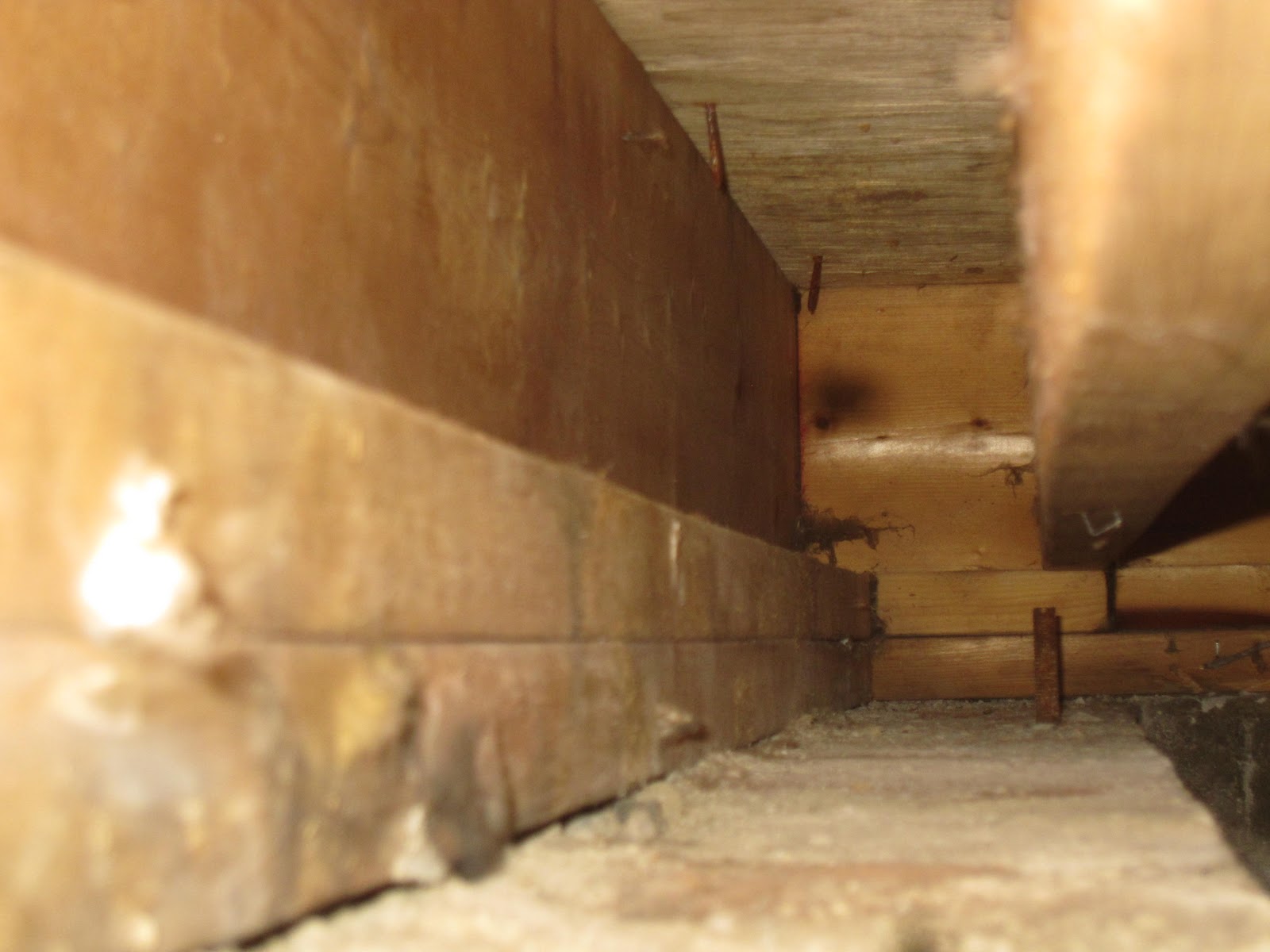
Fast forward a couple months and we are again presented with a space that is a good fit for spray foam. The joists in one section of our basement run parallel with the wall and directly in line with the inside edge. This creates a nice confined cavity that needs both vapour / moisture barrier and insulation.
I cannot see any practical way of getting in there to seal it off with caulk and a traditional vapour barrier.  Improperly or poorly sealed it will allow moisture and drafts to get trapped in this pocket and come up through the living room floor. So I grab some more foam.

I already have a love/hate relationship with the foam and its throw away canisters.  This is compounded by trimming away excess material that is going straight to the dump and the whole time this notion that the gas in the product is environmentally harmful is festering in the back of my mind as well.  So I dig a little deeper into the accusation.

Pulling up the MSDS sheet, I find the blowing agent in question is a product called HFC-134a.  The blowing agent is the compressed gas in the canisters that pushes the product out when I pull the trigger.  It is also what gets trapped in the microscopic bubbles of the product and helps it insulate.

Pulling up its wikepedia page, I learn that it is relatively non-toxic and is the greener alternative to R-12, its ozone-destroying predecessor.  All sounding good until I come to its Global Warming Potential (GWP).  A gases GWP allows us to compare how much a gas contributes to the greenhouse effect.  The scale is all based against CO2.  A rating of one means it is as significant to global warming as releasing CO2.  A rating of 2 would mean it is twice as harmful per kg.  The rating for HFC-134a over a 20 year span is 3840!

12.89 kg package of spray foam,
20% HFC-134a by weight = 2.58kg
GWP= 3840

Holy Shit.  I just sprayed the equivalent of 10 tonnes of CO2 into the atmosphere.  For the second time on this project. As a comparison that is a year of heavy SUV driving and it only produced 200 board feet of insulation.

I am now reeling a little bit, surprised this product is even legal and worried I messed up my math.  So I again turn to the web where I find an excellent article on GreenBuildingAdvisor.com.  In the article, they look at various insulation types to determine how long it takes for that product to have a net positive impact on the global warming.  i.e. how long until the energy savings resulting from your insulation upgrades offset the damage caused by your insulation.  The bad news for spray foam:  payback was in the order of 30 to 50 years and that was for professional application which is probably more efficiently applied.

Their computations are riddled with assumptions causing some spirited discussions in the comments but no matter how you choose to massage that data, spray foam is a concern.  But the article then proceeded to kick me when I was down.  The other insulation suspected of having a high global warming potential?  Extruded Polystyrene!  The blue Styrofoam that I installed I throughout the kitchen (not to mention my last house).  It will be 46 years before my kitchen starts to contribute positively to fighting climate change.  My six year old will be finalizing his retirement plans by then.


What does all this mean?  Besides the fact that I need to do my homework a bit better. [ I made the mistake of taking Dow's press release at face value].

For LEED?  nothing. There is no reference, prerequisites or points associated with insulation blowing agents

For our home?  Well that was the last time I will use Touch n'Foam 2-part spray insulation [their foam sealant has appropriate blowing agents].  And I just returned the 39 sheets of XPS insulation that were in my basement.

Luckily, there are alternatives out there.  The two prominent ones are expanded polystyrene (EPS) and  polyisocyanate.  Both of them use a much greener blowing agent and the same article I referenced before has their payback in the 2.7 to 4 year range.  In the end I will probably try both those products out and write reviews on them.  The replacement for those 39 sheets of XPS in the basement:  Isolofoam which is an EPS product.  It doesn't have quite the R value of EPS and requires a protective barrier to act as a vapour barrier but I can at least use it with a clear conscience.