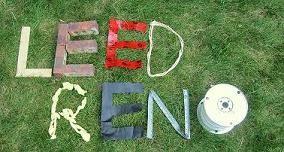
Friday, April 22, 2011

Six cool things we are not doing

Happy Earth Day!  I figured today would be a good chance to share some amazing home features which won't be included in our project. While we are proud of the renovation that we are undertaking, project limitations (cost, time, the house) have taken some very cool eco house features out of our scope.  Here is the list of six of those cool things that I wish were included in our project, maybe they will inspire you:

Geothermal Energy
Geothermal (or Ground Source) heat pumps take advantage of the fact that after a certain depth the ground around our homes is a very consistent temperature.  It is deep enough that it is insulated from  the seasonal variations and ends up being a nice consistent  temperature.  So rather than go to the effort of creating heat in the winter and air conditioning in the summer, you just exchange heat with the soil.  Ends up being a very efficient way to heat and cool a home.

Why we aren't doing it:  Cost.  To retrofit an existing home is in the tens of thousands of dollars. Geothermal will reduce your heating costs and end up paying for itself but ironically those savings are greatly reduced if you have a "green" home.  The smaller and more energy efficient your home (i.e. the lower your heating bill) the longer it takes to save your money back.  While a geothermal heat pump is out, we are planning on including an air-to-air thermal pump in our renovation.

Induction Stove
I have been trying to find an excuse to buy an induction stove for years.  Traditional electric stoves heat a electric element which then heats the pot (or the glass cooktop and then the pot).  Induction heating uses electromagnetic induction to heat the pot directly.  The result is faster and more efficient heating.  It also means you have electric heating that is a responsive as gas and a stove top that isn't hot and can't be left on (it doesn't work unless there is a pot there).

Why we aren't doing it:   We have a good efficient stove that we can't justify replacing right now.  Induction appliances are also pretty pricey.

Rainwater Capture
We will be buying rain barrels this spring.  Collecting water in rain barrels for your garden and lawn have a host of benefits, but in the end it collects a very small fraction of the water.  As an example, 25mm of rainfall results in 3750 L of water coming off our roof ( for the imperial readers 1" = 1000 gallons).  Our rain barrels might collect 10% of that.

In the meantime the rest of the rain goes into the stormwater collection system, while at the same time we pump, filter, disinfect and fluoridate water from the river to our house and we just flush it down a toilet.  Seems inefficient.  Large scale rainwater capture or harvesting usually involves a large storage tank which provides water for the home and in some cases it can be completely self sustaining (i.e. no city water).  I have also seen set ups where it is just a rain barrel in the attic that feeds the bathroom toilets.

Why we aren't doing it:  The retrofit cost is high for a large scale unit and our home being a bungalow with a crazy roof line makes a small scale project awkward.

Greywater Recycling
Instead of collecting rainwater, why not collect and re-use your own waste water.  Now to clarify, grey water includes everything that goes down the drain except toilet water.

Like rainwater, you can go big or small.  Big projects include tanks and filtration systems but this could be as simple as the toilet/sink combo to the right. When you flush this Caroma designed toilet the tank refills via the above sink allowing you to wash your hands.  That waste water is then stored for the next flush.  I had seen a lot of these in the cramped bathrooms of Japan.  Not only are they efficient they are also very compact.


Why we aren't doing it:  Going big on this was too large a project and we couldn't figure out small projects that work for our home layout (and I already fell in love with a different toilet that I will blog about later.)


Green Wall
A very cool development in green building is the increase in green or living walls.  These are walls completely covered in vegetation that can be outside or inside your home.  The attached picture was borrowed from a Canadian company called Green over Grey.

The benefits of a green wall?  Aesthetics, built in air filtration, can control heat loss/gain, creates a relaxing natural environment.

Why we aren't doing it: Space.  This is a feature to really design a home or building around, trickier with a retrofit unless you have a space that would naturally work well.  Unfortunately we don't.

Green Roof
Similar to a green wall but obviously on top of your house.  Green roofs have the same benefits of green walls but can also be used for things such as roof top gardening.


Why we aren't doing it:  Pretty tricky to retrofit, especially on an sloped roof.

Sunday, April 17, 2011

The Prerequisite that Scares Me

In the LEED for Homes rating system there are 18 prerequisites;  results or processes that must be met to achieve any rating.  Most of these are results based: you can't have invasive plants in your garden (SS 2.1), you need to have an energy star bathroom fan (EQ 5.1), etc.  Even in the worst case scenario where you totally missed the pre-requisite you can correct it after the fact.  Don't have a low flow toilet (WE 3.1)? Easy enough to replace it.

However,  there are a handful that are procedural.  This includes "Sustainable Sites 1.1: Erosion Controls During Construction". It requires that a detailed erosion control strategy is put in place prior to disturbing any soil.

Most of us (living in North America anyways) have probably seen a new housing development going in. First step always seems to be to bulldoze everything living to the ground. Apart from the loss of vegetation this also means that all the plant life that was holding the soil in place is gone.  Rainfall can then wash away the topsoil (the rich organic layer that is best for plant growth).  This is bad for the local vegetation as the topsoil that took years if not decades to develop is lost leaving harsher conditions behind, But those tons of soil are going somewhere too;  probably into a local stream, pond or even the municipal storm water management system.  None of those places appreciate a huge sudden influx of dirt.

So LEED requires that all projects, Gut/Rehab or new development, have an erosion control strategy in place.  This means protecting the existing top soil, and controlling the runoff and water entry points. It is a logical and valid prerequisite.  What scares me is that there is no chance for a correction.  You build a beautiful net-zero house that qualifies for LEED platinum but you (or your landscape professional) forget to put up a silt fence ... no certification.

Up to now our erosion control strategy has consisted of "Retain all existing vegetation and all unpaved areas designated as non-disturbance zones."  That worked fine until I needed to put in a larger basement bedroom window.  The corresponding excavation (we had no existing window wells) disturbed the topsoil and the ridiculously rocky ground under it.  My new erosion control strategy is to tarp the heck out of everything:

- Topsoil: stockpiled and protected from disturbance (with two tarps)
- Clay and rocks: tarped
- Window well: sides tarped
- Waste concrete: tarped

So I may have gotten a little carried away, but my topsoil is protected and there is no water run-off carrying earth off my property.

Wednesday, April 6, 2011

Reduce, Reuse, Freecycle

Throughout our kitchen deconstruction and renovation, we were pretty proud of ourselves for staying focused on ensuring that as much of the "waste" material as possible was diverted from the landfill.  In my original post on the deconstruction, we discussed a 97% diversion rate.  Unfortunately, that was based on the assumption that everything we wanted to divert we could.  In some cases this is easier said than done.

We had done our homework and had a sense of what could be diverted, but held on to it.   Our thinking being that it was better to achieve a critical mass for some of these products before we began diversion.  i.e. how  you dispose of 1 lb of drywall and 1 tonne will be different.  It was also to keep me from having to run to the scrap yard every week. So we sorted it and stored everything in the basement.  Now that we are adding a basement bathroom we kinda need that space so we began the process of clearing some of it out.  [Sidenote: I would strongly advise finding a better storage spot than the basement, having to carry 1150 lbs of drywall downstairs and then back up was stupid].

Reuse

As much as possible we are re-using material.  This is the greenest and most economical way of working.  No new materials to produce or purchase helps the planet and the pocketbook.  We are re-using the lumber from the interior wall we removed upstairs to build interior walls in the basement (which works really well because the slightly lower ceiling height means you can cleanly trim damaged stud ends).


We are also re-using most of the old insulation that is coming out of the walls, just not in walls.  Newer Roxul insulation provides better insulation per inch than our current 30 year old insulation but the old stuff still has life.  So it is going into the attic where space is not a concern.  We figure by adding the  insulation to the  attic we can boost the already strong insulation there by 50 - 60%.

Some of the material, while still re-usable, no longer had a place in our house. So the challenge was getting it in the hands of people who could use it.

Kijiji

If the material was in good enough condition we sold it using the online classifieds service Kijiji.  Free listings and decent size audience meant we were able to sell the hood fan, kitchen cabinets, countertops and sink fairly quickly.  The hood fan went into a main kitchen, the cabinets/countertops were broken into two sets and went to different cabins.


For materials that didn't have a significant monetary value we used freecycle.  This is an online forum where you are able to give away used (or new) goods.  The whole idea is that what is garbage to you probably has value to someone else.  So they connect the two people together rather than see the material in the landfill.

Our dining room cabinets (they were not prefabricated cabinets so not in excellent condition when they came out) and our basement fluorescent lights both found homes thanks in part to Freecycle.

I will point out you can also list things on Kijiji for free as well but we like the spirit of Freecycle and haven't had a need to post elsewhere.

Recycle


Material that can't be re-used needs to be recycled. For the metals this is fairly straight forward .. I hope.  Our old piping, wiring, nails and other scrap metal don't take up a lot of room so we are still stockpiling. But local scrap dealers are plentiful and we should be able to make some money disposing of this.

Eco-centres
Montreal has 6 eco-centres through out the city.  These centres collect various "waste" with the goal of properly diverting or disposing of it.  To date it is where I disposed of:

Full Load for Eco-centre
- Wood waste: broken / damaged boards and odd trimmings
- Brick Mortar (from the fireplace fiasco)
- Old Dishwasher
- Wooden Pallets
- Drywall

For all the above, I am comfortable knowing this material will be recycled or disposed of in the greenest way possible... except the drywall.  The city of Montreal doesn't recycle drywall to my knowledge but I was reassured by the eco-centre hotline and the on-site attendant that it would be.  When the drywall was dumped into a bin with aggregates I had renewed concern.

Which is too bad because gypsum (the main component of drywall) has great after life uses:
- it is a natural fertilizer
- can be reused in new drywall

Luckily there is a gypsum recycler in Quebec:  Recycle Gypse.  The service costs money but gives you peace of mind that your waste is being properly disposed of and they come to your house to pick it up which means I will never again have to stuff 1000lbs of drywall in the back of the minivan.

Sunday, March 27, 2011

Our Kitchen Before and After

Well it has taken almost 10 months since we first started working on the kitchen and there are still a few details left to clean up (window coverings, seat cushion, baseboards) but in our minds the kitchen in complete.

The "Green" features of our kitchen:

- No and low VOC paint
- Low VOC sealants
- Formaldehyde free cabinets made from FSC wood
- Zodiaq Recycled glass countertop
- Cork flooring
- R-24 Insulation and full air/vapour barrier
- Energy star appliances
- LED under-cabinet lights
- Recycled MDF, low VOC window trim
- Electronic charge station with dedicated switch
- 95% of demolition and construction waste diverted from the landfill

What is was:


Our new kitchen (although I am not too happy with the pictures. There always seemed to be too much contrast):


View from Family Room
View from Dining Room

Pantry Unit


Desk and Banquette

LED Lights in Action
Next up... the bathrooms.

Thursday, March 24, 2011

LED undercabinet lights

I had blogged previously about my preference for LED lights over CFLs.  Our house is finally starting to reflect that preference.

For our undercabinet lights we installed strip LEDs from LED Lights Canada.  We had looked originally for off the shelf options from the likes of Rona and Home Depot but weren't satisfied with the light output. LED Lights Canada has these ones custom made for them.  The result: 400 lumens per metre on 10 watts.
Custom cut LED strip for smallest cabinet

Installation was a breeze and the light quality and brightness is excellent.  We also had friends comment on how cool they run compared to their halogen lights.  You can run them all day and they will be only slightly warm to the touch so they don't heat up all your food being stored in the cabinet above.

Our only issue is that I had anticipated having off-the-shelf lights which would plug in.  So I wired one switch controlling three outlets. The strips we did buy have no built in driver.  LEDs use 12V power not 120V (which is why they work so well for battery powered flashlights).  So when hooking into your home power they need the power converted using a driver.  Replacement LED bulbs have that driver built in.  These didn't.  It is not a big deal, it just means that you need to buy a separate driver or in this case because of how I wired things up ... three drivers which pushed the price up.

I also need to give huge props to Harvey Hoffman (LED Lights Canada's owner/president) for the excellent customer service.  Sent him a long winded email and I got an immediate phone call with him walking me through the easiest and cheapest way to do my set up.  He custom cut all the strips to fit my cabinets and when I couldn't find the mounting clips with my order (I probably threw them out with the packaging) he mailed new ones the next day no questions asked.

Excellent product, excellent service, hopefully this Edmonton based company will do well.  I take the fact that they are sold out of the cabinet strips until next week's shipment as a positive sign of their success.

Saturday, March 19, 2011

New Zodiaq Counters

It has been a while since our temporary counters went up ... over 6 months.  Probably a little longer than normal but that does include our new baby renovation hiatus.

But a big part of the problem came from the fact that we knew what we wanted and we thought we knew where to get it.  Last year at the Montreal Home Show I saw a locally made recycled glass countertop.  It was beautiful and functional, 90% recycled content and locally sourced.  The company was Eco-Surface.  Their quote was good but their colour selection left a little to be desired.   The good news was they were expanding and in 100 days would be able to provide us a much better palette to pick from.

So we put up our temporary counters and waited.  Towards the 100 day mark we contacted them again to find their website directed us to: "Creations di Verre cite".  Alright, name change with expansion  ... no problem.   But there was a problem:  nobody would pick up the phone, or respond to an email, or website inquiries.   Heck their contact information on their website just provides their website address.

Chalked that up as a lost cause and headed back to square one.  Looking for alternatives there were several options although none of them local:

- EnviroGlas EnviroSLAB
- IceStone
Geos Sustainable Surfaces from Eos
- Zodiaq Terra Collection from Dupont

Out of these group, IceStone probably gets kudos for being the greenest of all the products.  100% recycled glass in concrete, No VOC, no resins, no petrochemicals.  The company is very forward thinking and the entire process has received Gold Cradle to Cradle certification.  That being said it is concrete and therefore susceptible to etching and staining.  Properly sealed and cared for this shouldn't be a problem but for us relying on "proper maintenance and care" is setting ourselves up.  While we didn't go with it in the kitchen, we are strongly looking at it for the bathrooms.

Geos, was recommended but we struggled with finding the right colour. They also were unable to confirm their recycled content.   For the countertop to qualify for LEED points it needs to be a minimum of 25% post-consumer recycled content (post-industrial counts at 50%).  Geos could not confirm or guarantee that.

EnviroGlas was a little too bold a palette for us (and there were no local distributors) so we went with Zodiaq.  Zodiaq countertops are a recycled glass and quartz blend embedded in a resin.  Very hard, very durable, low maintenance and we found the perfect colour.  Custom cut and installed by Comptoir St-Denis, we are very pleased with the result.


The one danger of using recycled glass in any countertop or product is colour control.  While it may seem easy to separate out the brown beer bottle from the green wine bottles and clear soda bottles,  all you need is one little chip of green glass to potentially ruin an all white counter.  Our colour "Coriander" contains clear and brown glass with the occasional fleck of green.  But if you really hunt you can find a couple other odd colours.  We have one speck in an obscure corner that is florescent orange. Luckily, I only spot it when I am cleaning down the counter... so not very often at all :)

Wednesday, March 9, 2011

Insulation: Manufacturer Follow-up

This is a follow-up to my post from January.  I would recommend reading that post first and if you really want to do your homework, read the article on GreenBuildingAdvisor.com as well.

Essentially, I grew concerned about the existence of HFC-134a in my foam insulation products.  As a result I switched my rigid insulation from Dow Styrofoam to Isolofoam's Isofoil although I will probably be trying out other rigid foam products as well. I have also stopped using Touch n' Foam's two part spray foam.

I won't lie, the Touch n' Foam product pissed me off.  I was surprised by the amount of HFC in it and the environmental impact it would have.  To the point that I wrote Rona / Reno-Depot and asked them why they carry it.  I felt their response skirted the question and also had the manufacturer deferring all responsibility for the product

"Good day Mr Lilley, Here is the response we received form the manufacturer. The propellants used in our cylinders were chosen by both the Canadian government and US government for this type of product. A different type of propellant was used in the past, but due to flammability, manufactures were forced to change. At this time, there are no alternatives due to regulations. If you should need further information don't hesitate to contact us again. Thank you for your support and have a nice day."

I am following up further with them to see if I can get an actual answer.

I also contacted Dow Chemicals. My only concern with dropping the Styrofoam was that the article I was basing the decision on said "I have to note here that I’m not 100% sure that XPS is made with HFC-134a; manufacturers are unwilling to divulge the exact blowing agents they use".  Wanting to make sure I wasn't stopping use of a product unjustly (and then blogging about it),  I went to the source.  I emailed Dow asking them about the charge and what they used as a blowing agent.  I will give them kudos for a providing a quick professional reply. They never did explicitly state their blowing agent but provided GWP numbers in line with HFC-134a.  Even if it isn't the exact agent the end result would be the same.  Here are their complete responses (from two different emails):


"I'm following up on your email and to conform that Dow Building Solutions (DBS) had successfully converted our North American manufacturing facility that manufactures STYROFOAM(tm) Extruded Polystyrene Insulation products, which includes Clademate, to its new zero ozone-depleting, no-VOC foaming agent technology. STYROFOAM Extruded polystyrene insulation is HCFC and CFC free.  


The proprietary formulation substitutes the hydrochloro-fluorocarbon (HCFC) 142b, an ozone-depleting compound that U.S. and Canadian regulations under the Montreal Protocol require to be phased out by January 1, 2010 in North America, with a non-ozone depleting compound. It enables Dow's North American customers to continue receiving STYROFOAM insulation with the same product performance and cost-leadership position, and reflects Dow's commitment, as part of its 2015 Sustainability Goals for Addressing Climate Change, to significantly reduce its greenhouse gas emissionsany further questions on this matter, do not hesitate to contact me at the phone number shown below my signature.  


Dow Building Solutions has completed a rigorous, external assessment of its building insulation products conducted by MBDC (McDonough Braungart Design Chemistry, LLC), a global sustainability consulting and product certification firm. STYROFOAM SIS Structural Insulated Sheathing, STYROFOAM Brand Extruded Polystyrene (XPS) Foam Insulation, THERMAX(tm) (ci) Exterior Insulation, STYROFOAM(tm) Brand Spray Polyurethane Foam (SPF) Insulation, and SAFETOUCH(tm) Fiberglass-Free Insulation have all achieved Cradle to Cradle(r) Certification , a process that assesses products for their ingredients' human health, environmental health and recyclability profiles. Dow products that have achieved Cradle to Cradle(r) Certification are eligible for points that contribute to various building certifications, such as the U.S. Green Building Council (USGBC) Leadership in Energy & Environmental Design (LEED ) Rating Systems and National Association of Home Builders' (NAHB ) National Green Building Program. Certified products can be listed under the U.S. EPA Environmentally Preferable Purchasing Program, as well as several other environmentally conscious product purchasing programs."

"XPS has a ozone depletion number of 0 and a global warming potential of 1300, which reduced the GWP100 from previous while maintaining the insulation’s thermal and physical properties."